

Your Helmet Is More Than Just Eye Protection
Choosing the right welding helmet directly affects your weld quality, your comfort, and your long-term eye health.
As professional welders, you spend hours under the hood, often in demanding shop or field conditions.
The helmet you wear is not just another piece of PPE. It is a primary tool that influences how clearly you see the puddle, how consistently you strike an arc, and how well you protect your vision over the course of your career.
At Canada Welding Supply, we work with professional welders across the country every day, and we see firsthand how upgrading to a premium helmet changes performance on the job.
If you are weighing your options, here are the seven reasons we believe a premium welding helmet is worth the investment.
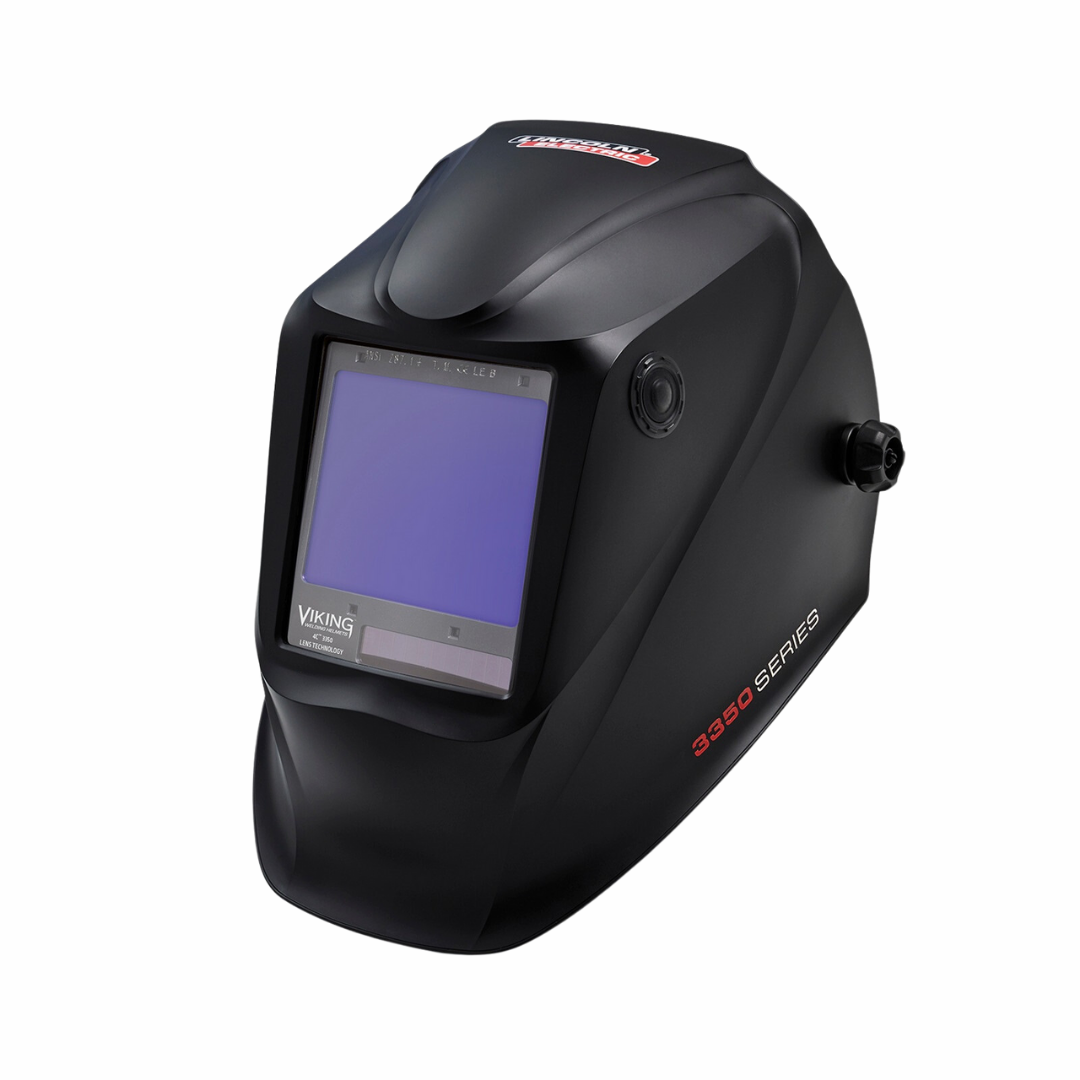
Pros Choose the Lincoln Electric Viking 3350
Professional welders consistently choose the Lincoln Electric Viking 3350 because it delivers clarity, comfort, and durability without compromise.
When we talk to fabricators, pipe welders, and structural crews, this helmet comes up again and again for one simple reason: it performs.
The Viking 3350 is built for serious work. It features Lincoln’s 4C lens technology, a large viewing area, external grind control, and a rugged shell that holds up in tough environments.
The optical clarity reduces eye strain and makes it easier to track the puddle. The headgear distributes weight evenly, which matters during long shifts.
Key Specifications:
- 4C® Lens Technology for true colour optics
- Large viewing area (12.5 sq. in.)
- Variable shade range 5–13
- External grind mode button
- 4 arc sensors for reliable detection
- Lightweight, balanced shell design
- 5-year warranty
View Product Details – Lincoln Electric Viking 3350
1. Superior Optical Clarity Improves Weld Quality
Clear vision directly improves weld accuracy and consistency. When your lens distorts colour or creates haze, you compensate without realizing it. You move slower. You second-guess your puddle. You grind out more mistakes.
Premium helmets use higher-grade auto-darkening filters with true colour technology. Instead of a green tint and muddy contrast, you see sharper edges and more natural colour tones. This makes it easier to distinguish the arc, the puddle, and the joint line.
Over time, that clarity translates into better bead control and fewer reworks. For professionals who weld every day, even small improvements in visibility add up to measurable gains in quality and productivity.
2. Faster Auto-Darkening Reaction Time Protects Your Vision
Consistent arc detection protects your eyes and reduces fatigue. Lower-end helmets often have slower switching speeds or inconsistent sensor coverage. That delay may be measured in fractions of a second, but repeated exposure matters.
Premium helmets use advanced sensors and faster reaction times to darken instantly when you strike an arc. This protects your retinas from micro-exposure and reduces the strain that builds up over a full shift.
In tight positions or out-of-position welds, reliable sensors matter even more. A premium helmet maintains consistent darkening even when your head angle changes. You stay protected without adjusting your stance just to trigger the lens.
3. Larger Viewing Area Increases Control and Awareness
A larger viewing area gives you more control over your work environment. When you can see more of the joint and surrounding area, you weld with greater confidence and fewer blind adjustments.
Premium helmets typically offer wider lenses with improved side-to-side visibility. This helps when you track long seams or monitor your torch angle. It also improves situational awareness in busy shops where other trades are working nearby.
More visibility means fewer awkward head movements. That reduces strain and allows you to focus on execution instead of fighting your field of view.
4. Better Headgear Reduces Neck and Shoulder Fatigue
Comfort directly affects endurance and performance. If your helmet shifts, pinches, or puts pressure on your forehead, you feel it by the end of the day.
Premium helmets feature adjustable, multi-point headgear systems that distribute weight evenly. They sit balanced on your head instead of pulling forward. The difference becomes obvious during long production runs or heavy fabrication days.
Reduced neck strain leads to better posture and steadier torch control. When you remove unnecessary fatigue, you maintain precision for longer periods. That matters in professional environments where consistency defines quality.
5. Stronger Shell Construction Withstands Harsh Environments
Durability determines how well your helmet holds up in real working conditions. Professional welders deal with sparks, grinding debris, confined spaces, and the occasional drop.
Premium helmets use higher-grade shell materials that resist heat and impact. They are designed for industrial use, not occasional hobby welding. The controls are sealed better. The grind mode is more accessible. The overall construction feels solid in your hands.
A helmet that lasts years instead of months reduces downtime and replacement costs. When your gear works as hard as you do, you avoid unnecessary interruptions on the job.
6. Long-Term Value That Outweighs the Initial Cost
The true cost of a welding helmet is measured over years, not at the checkout counter. A budget helmet may save money upfront, but it often sacrifices clarity, comfort, and longevity.
Premium helmets reduce eye strain, improve productivity, and last longer. That combination delivers real return on investment. Fewer headaches. Fewer redos. Fewer replacements.
When you break down the cost across daily use, the difference becomes small compared to the benefits. For professionals who weld full-time, premium gear pays for itself through performance and reliability.
7. Advanced Features That Improve Safety, Adjustability, and Productivity
Modern premium helmets include advanced features that improve overall workflow. These include external grind controls, digital shade adjustments, sensitivity tuning, and delay controls.
- External grind mode buttons for faster switching between welding and grinding
- Digital shade adjustment for precise control across multiple processes
- Sensitivity controls for low-amp TIG and high-amp applications
- Delay settings to manage lens return time after arc completion
- Multiple arc sensors for consistent coverage in tight positions
- Replaceable batteries and solar assist systems for dependable power
Adjustability allows you to fine-tune the helmet for MIG, TIG, or stick welding without compromise.
External controls save time because you do not have to remove your helmet to switch modes. Better battery systems ensure consistent performance without sudden failures.
All of these features combine to make your workday smoother. You spend less time adjusting gear and more time welding. In professional environments, that efficiency matters.
Our Recommendation – The Lincoln Electric Viking 3350 for Optical Clarity, Comfort, and Long-Term Reliability
If you are ready to upgrade, we confidently recommend the Lincoln Electric Viking 3350 for its proven performance across Canadian job sites. This helmet delivers exceptional optical clarity, a large viewing area, dependable sensors, and all-day comfort.
It stands out because it balances every key factor: protection, visibility, durability, and adjustability. Professional welders choose it because it performs consistently in demanding conditions.
Key Specifications:
- 4C® Lens Technology
- 12.5 sq. in. viewing area
- Shade range 5–13 with variable control
- External grind button
- 4 arc sensors
- Lightweight, ergonomic headgear
- Industrial-grade shell
- 5-year warranty
View Product Details – Lincoln Electric Viking 3350
At Canada Welding Supply, we focus on gear that works in real-world welding environments.
We stand behind premium helmets because we see the difference they make every day in shops and on sites across the country.
When your helmet supports your skill instead of limiting it, you weld better, feel better, and protect your career for the long haul.